After extensive teasers and witnessing Google’s near-Aberville level of secrecy, we’ve finally been introduced to the new Pixel series for 2025.
As expected, most of the hardware specs align with earlier leaks. The two Pro models, in particular, look nearly identical to their predecessors, achieving a cost-effective upgrade by “keeping the same shell but upgrading the internals.”
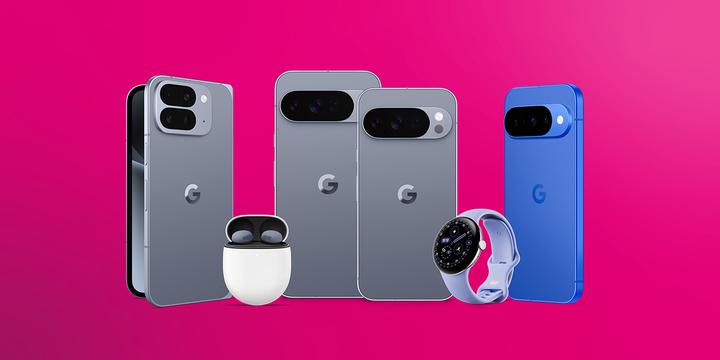
That said, the Made by Google event wasn’t completely without highlights. While this year’s four Pixel phones brought no hardware surprises, Gemini received several new enhancements and deeper hardware-software integration.
But stronger AI doesn’t justify lackluster hardware. This year’s Made by Google event, hosted by Jimmy Felon, also introduced four new Pixel 10 series devices, each more specialized than any previous generation.
Too Long; Didn’t Read (TL;DR)
- Pixel 10: Starts at $799, small-sensor 5x telephoto, upgraded USB speed, imaging improvements rely entirely on computational photography
- Pixel 10 Pro / Pro XL: Start at $999 / $1199, sensors same as Pixel 9a, XL has exclusive 25W wireless charging
- Pixel 10 Pro Fold: Starts at $1799, world’s first foldable with IP68 dust resistance, otherwise familiar specs
- Pixel Watch 4: Starts at $349.99, one of the few smartwatches still using a curved circular display
- Purchase of a Pro or Fold model includes one year ($239 value) of Google AI Pro subscription
A Balanced Upgrade
As one of the few companies with its own SoC, Google’s Tensor processor, first introduced in the Pixel 6 series, has long been criticized for underperformance and poor power efficiency.
This historical weakness has finally been addressed simply because Google ended its partnership with Samsung on 5nm fabrication and switched to TSMC’s second-generation 3nm process (N3E) for the custom Tensor G5.
According to the event, the Tensor G5 uses a 1+5+2 octa-core architecture, with an ARM Cortex-X4 prime core. Based on pre-event AnTuTu leaks, the G5 shows significant improvement over the G4, performing closer to the Snapdragon 8 Gen 2 (around 1.28 million points).
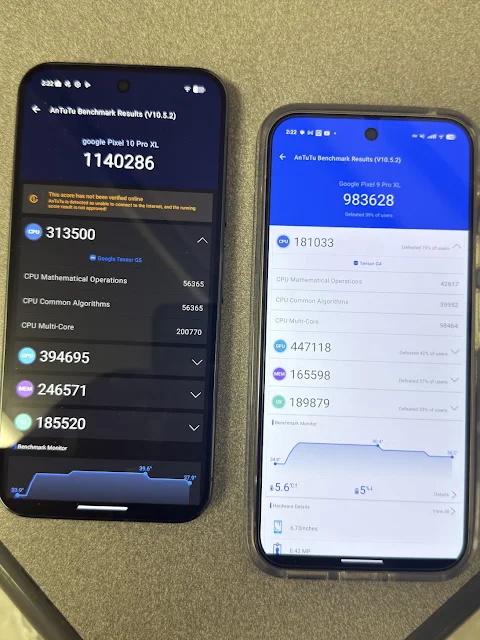
Google also continued its tradition of using the same processor across the series all four new Pixels are equipped with the Tensor G5, without cutting cores like a certain competitor (Apple).
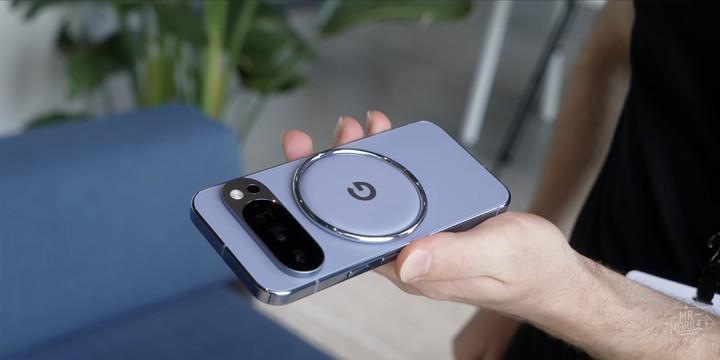
Additionally, five years after Apple introduced MagSafe, other major manufacturers are finally catching up. The entire Pixel 10 series supports Pixelsnap, a magnetic accessory ecosystem that includes full Qi2 compliance and Google’s own peripheral offerings:
But just as the Tensor G5 barely catches up with the times, the Pixel 10 series’ connectivity takes a controversial turn
According to the event, all US models except the foldable Pixel 10 Pro Fold have removed the physical SIM card slot. This is bad news for Pixel enthusiasts who prefer imported, unlocked US models.
Candybar Phones: A Decade of Pixel
As the tenth generation of Google’s own-brand devices, many had hoped the Pixel 10 would bring major changes like the iPhone X did at a similar milestone. Unfortunately, Google defied those expectations
The three candybar models in the Pixel 10 series look almost “identical” to the previous generation: no special frame materials, no anti-reflective glass, no flashy back covers. They still look every bit like a Pixel.
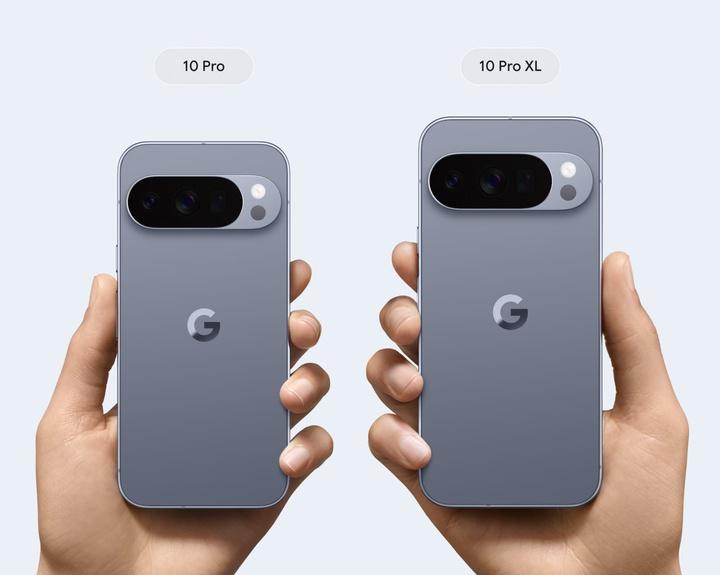
What’s more amusing is that Google is pushing a “give and take” philosophy this year, regressing in areas that were once critical to the Pixel identity.
Take the base Pixel 10, starting at $799. After four generations of dual cameras, it finally follows Samsung’s S-series with a triple-camera setup: main, ultrawide, and a new 5x telephoto using a Samsung 3J1 sensor (1/3-inch):
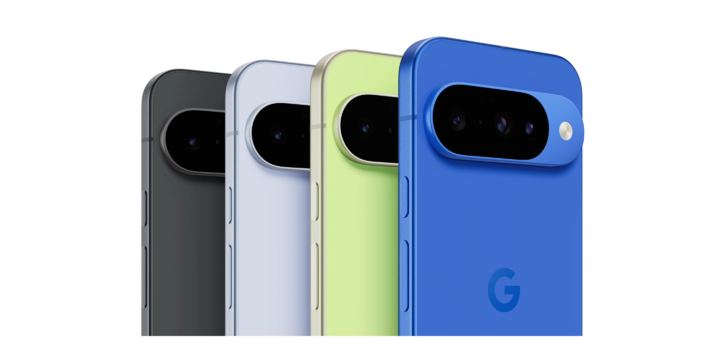
However, adding the telephoto came at a cost the main and ultrawide sensors were downgraded to the same ones used in the mid-range Pixel 9a. This is nothing short of a betrayal for a series that once prided itself on “no sensor-based class division.”
Beyond the cameras, the Pixel 10 does get one more meaningful upgrade: its USB port now supports USB 3.2, matching the Pro models. Compared to the removal of the SIM slot, this feels like a small consolation.
The Pixel 10 at least got some changes, but the two Pro models received almost no hardware upgrades especially in imaging. In an era where even Samsung is trying to fit 200MP sensors into foldables, Google’s approach feels out of touch.
Interestingly, though, Google revived a long-dormant feature: Super Res Zoom. This computational zoom enhancement, first introduced on the Pixel 3, has been taken to a new extreme on the Pixel 10 Pro series now supporting up to 100x zoom.
But given the small telephoto sensor on the Pixel 10 Pro, the resulting oil-painting effect is predictable. It might impress users abroad, but certainly won’t hold up to scrutiny.
It’s not all bad news for the Pro series, though or more specifically, for the Pixel 10 Pro XL. While the other two models support Qi2, the largest model exclusively supports Qi2.2, enabling wireless charging speeds of up to 25W.
Foldable: This Fold Doesn’t Fear Dust
On the foldable front, Google continues to move at its own pace. At first glance, the Pixel 10 Pro Fold looks identical to the Pixel 9 Pro Fold:
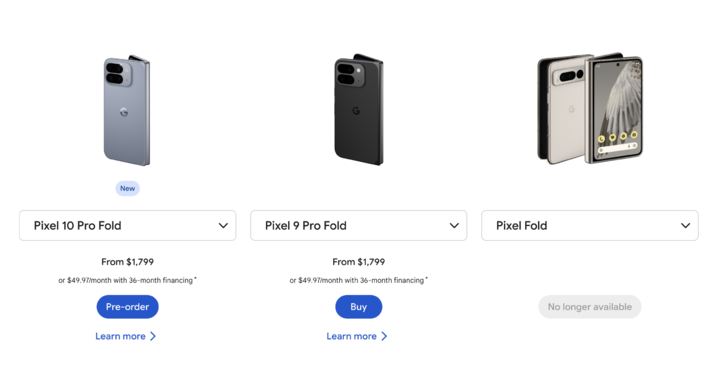
But that doesn’t mean it’s without innovation. While other manufacturers are engaged in a specs war, Google has chosen a different path the Pixel 10 Pro Fold is the world’s first foldable with an IP68 rating for water and dust resistance.
Previously, the best protection on a foldable was Honor’s Magic V5 with its IP58/IP59 dual certification. While water resistance was nearly maxed out, the Pixel 10 Pro Fold is the first to achieve Level 6 dust resistance making it significantly more durable in everyday environments.
According to Google, the Pixel 10 Pro Fold uses a new “gearless” hinge that relies entirely on a cam structure to provide the folding feel. Google claims this hinge can last over ten years three years longer than Android’s support cycle.
But as if to maintain balance, Google improved the protection rating at the expense of the cameras. The main sensor on the Pro Fold has been downgraded in both resolution and size, putting even more pressure on Gemini’s computational capabilities.
Gemini: The AI That’s Taking Over
Unsurprisingly, about half of the Made by Google event was dedicated to Gemini.
The most useful update is the new Gemini Live. Previously limited to voice conversations, it can now use the phone’s camera to identify and highlight key information in real-time:
Compared to pure voice interaction, this visual-assisted approach feels more futuristic closer to the interactive HUDs we see in games.
Additionally, the Pixel camera now includes Gemini-assisted shooting. The AI will not only guide your composition but also extract several representative poses from earlier footage for you to choose from. Select a style, and it provides step-by-step framing instructions.
Gemini is also integrated into Google Photos’ editing workflow. Users can now use natural language similar to chatting with an AI for text-to-image requests to guide Gemini in post-processing, including removing glare, reducing haze, boosting saturation, and more.
Even more impressively, Google delivered on an AI feature Apple promised at last year’s WWDC.
Google introduced a feature called Magic Cue, which works similarly to a combination of iPhone’s App Intents and intelligent suggestions. It automatically displays information extracted from your data history, schedule, and timeline in appropriate app contexts, essentially “helping you remember things”.
Gemini’s voice capabilities have also improved. In the latter part of the event, Jimmy Felon demonstrated Gemini’s real-time call translation not just converting text and reading it in a robotic voice, but automatically recognizing and mimicking the speaker’s tone and delivery to produce foreign-language speech that “sounds more like you than you do”.
This may be the most sci-fi feature shown at the event. Gemini’s voice translation demonstrated impressive speed and accuracy in live demos, bringing us one step closer to “replacing human interaction.”
So, what’s the verdict? A Pixel 10 that upgrades and downgrades at the same time, a nearly unchanged Pixel 10 Pro, and a dust and water-resistant Pixel 10 Pro Fold with prices ranging from $799 (approx. RMB 5,733) to $1,799 (approx. RMB 12,903). If you live in a market dominated by “the big two and a strong third,” would the Pixel interest you?













Leave a Reply